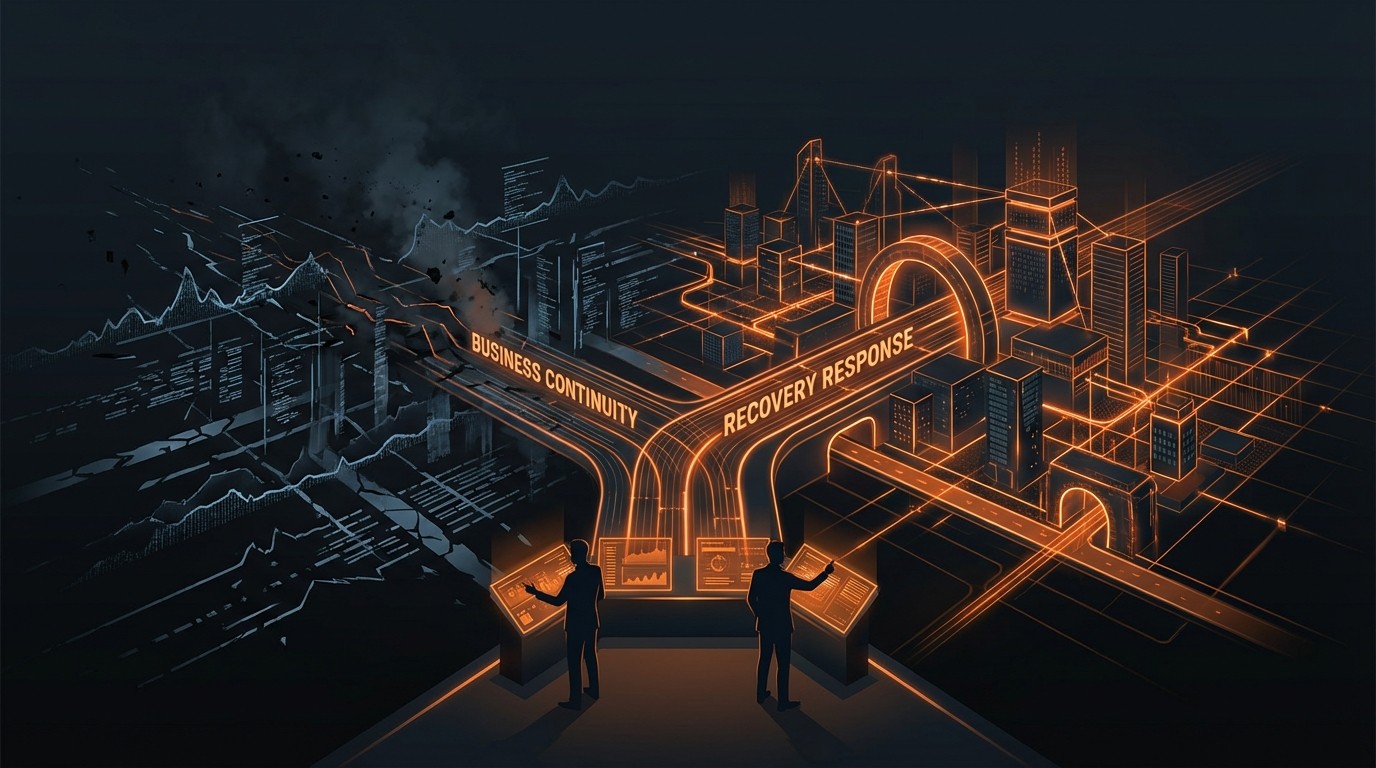

Disruption is no longer an exception; it is a constant. Whether it’s a cyberattack, supply chain failure, system outage, or unexpected external event, organizations today operate in an environment where interruptions are inevitable. The real differentiator is not whether disruption occurs, but how effectively an organization responds and recovers.
Resilience is no longer just a defensive capability; it is a strategic advantage. Organizations that can maintain operations, adapt quickly, and recover with confidence are better positioned to protect revenue, retain customer trust, and sustain long-term growth.
This is where ISO 22301, the international standard for Business Continuity Management (BCM), plays a critical role. It provides a structured framework that enables organizations to move from reactive responses to proactive resilience.
The New Reality: Disruption Is Inevitable
Modern organizations face a growing range of risks that can disrupt operations at any time. These include:
Cyber incidents that compromise systems and data
Supply chain disruptions are affecting production and delivery
IT failures are causing system downtime
Regulatory changes or compliance challenges
Natural or external events impacting infrastructure
The frequency and complexity of these disruptions are increasing. What was once considered a rare occurrence is now a recurring business challenge.
Without a structured approach to continuity, organizations are forced into reactive decision-making, often resulting in delayed responses, operational chaos, and increased financial loss.
Resilience, therefore, is not about avoiding disruption. It is about ensuring that disruption does not translate into prolonged downtime or business failure.
Understanding ISO 22301: A Framework for Continuity
ISO 22301 provides a globally recognized framework for establishing, implementing, and maintaining an effective Business Continuity Management System (BCMS). It is designed to help organizations prepare for disruptions, maintain critical operations, and recover efficiently.
At its core, ISO 22301 focuses on:
Identifying critical business functions
Assessing risks and potential impacts
Developing structured response and recovery strategies
Testing and continuously improving continuity plans
Unlike traditional contingency planning, ISO 22301 embeds continuity into the organization’s overall strategy. It ensures that resilience is not an afterthought, but a built-in capability.
From Risk Identification to Business Impact Understanding
The foundation of ISO 22301 lies in understanding what truly matters to the organization. This begins with a Business Impact Analysis (BIA).
A BIA helps organizations:
Identify critical processes and dependencies
Determine acceptable downtime thresholds
Assess the financial and operational impact of disruptions
Prioritize recovery efforts based on business needs
This process shifts the focus from generic planning to targeted, business-driven decision-making. Instead of treating all disruptions equally, organizations can allocate resources where they matter most.
Understanding impact is what enables effective recovery.
Building Response and Recovery Capabilities
Once risks and critical functions are identified, the next step is to develop structured response and recovery strategies.
ISO 22301 emphasizes the importance of having predefined plans that outline:
Roles and responsibilities during an incident
Escalation procedures and decision-making authority
Communication protocols for internal and external stakeholders
Recovery timelines and resource allocation
These plans ensure that when disruption occurs, the organization does not rely on improvisation. Instead, it responds with clarity, coordination, and speed.
Effective recovery is not just about restoring systems; it is about maintaining operational continuity and stakeholder confidence throughout the disruption.
Testing, Validation, and Continuous Improvement
A plan that is not tested is a plan that is likely to fail. ISO 22301 places strong emphasis on regular testing and validation of continuity strategies.
This includes:
Tabletop exercises to simulate real-world scenarios
Live drills to test response capabilities
Post-incident reviews to identify gaps and improvements
Testing ensures that employees understand their roles, systems function as expected, and potential weaknesses are addressed before they become critical failures.
Continuous improvement is a key principle of ISO 22301. As threats evolve, so must the organization’s approach to resilience. This creates a dynamic system that adapts to changing risks and operational environments.
Embedding Resilience into Organizational Culture
Technology and frameworks alone cannot ensure resilience. True continuity is achieved when it becomes part of the organizational culture.
ISO 22301 encourages organizations to:
Promote awareness of business continuity across all levels
Provide regular training and education
Integrate continuity considerations into daily operations
Ensure leadership involvement and accountability
When employees understand the importance of continuity and their role within it, they become active participants in maintaining resilience.
This cultural shift transforms business continuity from a compliance requirement into a shared responsibility.
The Business Value of ISO 22301
Implementing ISO 22301 delivers measurable benefits that extend beyond risk mitigation:
Reduced Downtime: Faster, more structured response minimizes operational disruption
Improved Recovery Time: Clearly defined processes accelerate restoration of critical functions
Enhanced Stakeholder Confidence: Demonstrates commitment to reliability and preparedness
Regulatory Alignment: Supports compliance with industry standards and governance requirements
Competitive Advantage: Resilient organizations are better positioned to maintain service continuity and customer trust
In a competitive and uncertain environment, resilience becomes a differentiator. Organizations that can withstand disruption gain an edge over those that cannot.
Leadership’s Role in Driving Resilience
Building a resilient organization requires strong leadership commitment. Business continuity cannot be delegated entirely to operational teams; it must be driven from the top.
Leaders play a critical role in:
Prioritizing continuity as a strategic objective
Allocating resources for training, tools, and implementation
Ensuring regular reporting on risk and resilience metrics
Embedding continuity into decision-making processes
When leadership is actively involved, resilience becomes aligned with business goals, ensuring that continuity efforts deliver real, measurable impact.
Conclusion: From Disruption to Confidence
Disruption is inevitable, but chaos is not. Organizations that adopt ISO 22301 move from uncertainty to control, from reactive response to structured recovery and resilience.
By identifying critical operations, preparing response strategies, testing capabilities, and fostering a culture of awareness, businesses can ensure continuity even in the face of unexpected events.
Resilience is not built overnight, but it is built through consistent, structured effort and strategic commitment.
Take the next step toward operational resilience. Strengthen your organization’s ability to respond, recover, and thrive with ISO 22301. Connect with GUTS today at guts.bh and build a future-ready, resilient enterprise.
🌐 www.guts.bh
📧 contact@guts.bh
Explore More

How Data Science Can Uncover the Hidden Potential of Your Business
Data Science

Why Cybersecurity Matters More Than Ever in Today’s Digital World
Cybersecurity
Audit & Certification Preparedness in 2025: Securing Cyber Resilience
Cybersecurity

How BI Data Science-Dashboards Drive Smarter Business in 2025
Data Analytics

