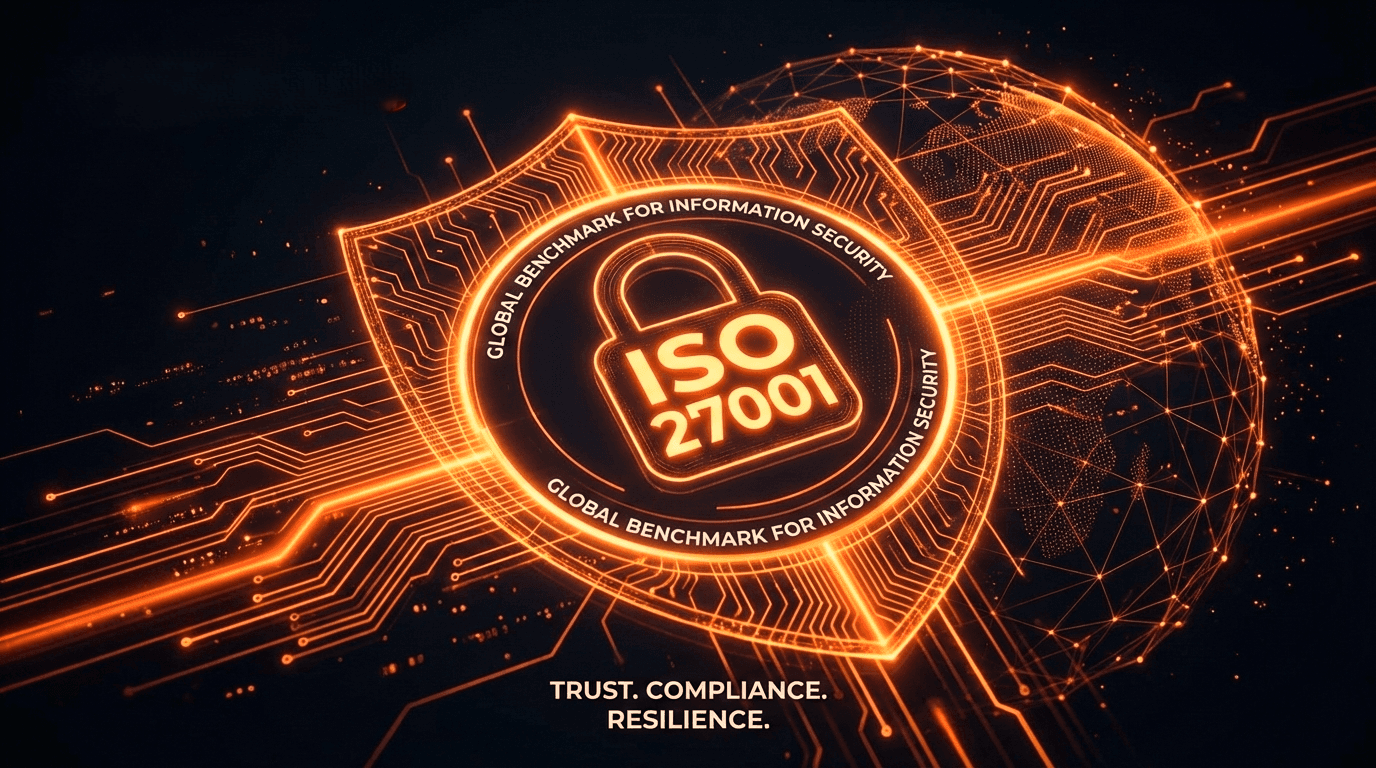

Imagine this: your organization handles sensitive client data daily, but a single misconfigured system exposes it to risk. The cost isn’t just financial; it’s trust, reputation, and compliance. This is where ISO 27001 comes in, offering a structured, internationally recognized approach to information security that protects both your assets and your credibility.
What Is ISO 27001?
ISO 27001 is the global standard for building a secure, compliant Information Security Management System (ISMS). It provides a structured framework that covers policies, controls, audits, and continuous improvement.
Rather than treating security as an afterthought, ISO 27001 ensures your organization actively identifies risks, implements appropriate safeguards, and monitors performance continuously. The standard isn’t just a checklist; it’s a strategic framework that transforms cybersecurity from a technical function into a business enabler.
By adopting ISO 27001, organizations establish measurable security practices that not only reduce exposure but also demonstrate accountability to clients, regulators, and partners.
Why ISO 27001 Matters
In today’s digital landscape, cyber threats are more sophisticated than ever. Organizations face phishing attacks, ransomware, and insider threats that can compromise sensitive data in seconds. ISO 27001 matters because it provides:
Audit-ready, proven security: Policies and controls align with international standards, ensuring readiness for audits and regulatory compliance.
Stronger governance: Clear roles, responsibilities, and processes reduce risk and guide decision-making.
Client confidence: Demonstrating responsible data handling strengthens relationships with clients, partners, and regulators.
Operational resilience: Certification is not just a badge; it reflects a culture of continuous improvement and proactive risk management.
A 2024 Ponemon Institute study found that organizations with mature ISMS frameworks experienced 40% fewer data incidents annually than those without formalized standards. The evidence is clear: structured information security saves more than just data; it protects reputation, revenue, and relationships.
Who Needs ISO 27001?
ISO 27001 is relevant across industries, particularly for organizations handling sensitive or regulated information. Typical beneficiaries include:
Companies managing confidential data, financial records, or intellectual property.
Tech, cloud, and digital service providers are seeking global compliance standards.
Businesses aiming to enhance trust with international clients or partners.
Industries where a security failure could disrupt operations, supply chains, or critical infrastructure.
Even smaller enterprises can benefit. Implementing ISO 27001 scales with organizational size and complexity, ensuring that growth does not outpace security capability.
Benefits of ISO 27001 Certification
ISO 27001 is more than a framework; it’s a strategic investment in resilience. Benefits include:
Stronger, measurable security posture across all operations.
Reduced operational, data, and compliance risks, decreasing the likelihood of costly incidents.
Increased trust with clients, partners, and regulators.
Improved audit readiness and governance, providing confidence to leadership and stakeholders.
Greater resilience against evolving cyber threats, from phishing to insider attacks.
Each benefit translates into tangible business outcomes: lower downtime, faster incident response, and a culture of security that protects both people and assets.
How ISO 27001 Works
Achieving ISO 27001 certification is a structured process, designed to ensure that security is integrated at every organizational layer. Key steps include:
Assess the current security landscape – Identify risks, vulnerabilities, and areas requiring improvement.
Implement controls and ISMS framework – Align technical and procedural safeguards with ISO 27001 standards.
Monitor performance and incidents – Track adherence, detect anomalies, and continuously assess effectiveness.
Improve continuously – Adapt to evolving threats, regulatory changes, and operational growth.
This iterative approach ensures that your security practices remain effective, measurable, and aligned with business priorities.
GUTS Support for ISO 27001
Navigating ISO 27001 can be challenging without expert guidance. GUTS supports organizations at every stage, providing:
Readiness assessments and gap analysis to identify areas requiring improvement.
ISMS development and documentation tailored to organizational needs.
Risk assessment and control implementation for both technical and operational safeguards.
Internal audit preparation to ensure smooth certification processes.
Certification guidance and ongoing compliance support to maintain standards long-term.
With GUTS, ISO 27001 implementation becomes not just about compliance, but a strategic enabler for operational resilience.
Real-World Impact
Consider a multinational technology firm that recently adopted ISO 27001 with guidance from GUTS. Before implementation, frequent misconfigurations and fragmented controls exposed them to regulatory penalties and operational delays. Post-certification, the organization achieved:
35% faster incident response times
Fewer audit findings year-over-year
Enhanced trust from key enterprise clients
The framework didn’t just prevent incidents, it created a culture of security awareness, empowering teams to proactively manage risks rather than react to them.
Conclusion
ISO 27001 is the benchmark for organizations that take information security seriously. It provides a structured, auditable framework that transforms security from a technical obligation into a strategic advantage.
From protecting sensitive data to demonstrating trust and compliance, ISO 27001 certification safeguards both assets and reputation. When paired with expert guidance from GUTS, your organization gains the tools, processes, and strategic insight needed to thrive securely in a digital-first world.
Strengthen your security, reduce risk, and achieve ISO 27001 certification with GUTS.
Explore More

How Data Science Can Uncover the Hidden Potential of Your Business
Data Science
Why Cybersecurity Matters More Than Ever in Today’s Digital World
Cybersecurity
Audit & Certification Preparedness in 2025: Securing Cyber Resilience
Cybersecurity

How BI Data Science-Dashboards Drive Smarter Business in 2025
Data Analytics

